
For decades, Australians have viewed residential property as the gold standard of wealth creation.
From backyard barbecues to boardrooms, the prevailing wisdom has been simple: buy property, hold it long enough, and you’ll likely come out ahead.
Yet over the past few years, a fascinating divergence has emerged. While housing markets in many parts of the world have experienced price declines, stagnation or slower growth amid higher interest rates, cryptocurrencies, led by Bitcoin, have staged remarkable rallies.
The question is: why?
The answer lies not only in economics but also in changing investor behaviour, technological adoption, demographic shifts and the growing role of institutional capital. For mortgage brokers, investors and homeowners, understanding this shift offers valuable insight into the future of wealth creation.
Two Asset Classes Moving in Opposite Directions
Traditionally, property and cryptocurrency have occupied opposite ends of the investment spectrum.
Property is tangible, income-producing and often financed through leverage. Cryptocurrency, particularly Bitcoin, emerged as a highly speculative digital asset with no rental income, significant volatility and uncertain regulation.
When central banks around the world aggressively lifted interest rates to combat inflation, many investors assumed both markets would come under pressure. Higher borrowing costs reduce housing affordability and borrowing capacity, while risk assets such as cryptocurrencies typically struggle when money becomes more expensive.
Property largely followed the expected script. Higher mortgage repayments, tighter lending standards and cost-of-living pressures weighed on demand in many markets. Yet Bitcoin and other cryptocurrencies surprised critics by rebounding strongly and attracting significant new capital.
The reasons behind this divergence are reshaping investment conversations globally.
Bitcoin’s Transformation from Experiment to Mainstream Asset
Perhaps the biggest change has been Bitcoin’s evolution from a niche technology project into an institutional investment asset.
A decade ago, Bitcoin was largely the domain of technology enthusiasts and speculative traders. Today, it has become an increasingly accepted component of diversified portfolios. The arrival of spot Bitcoin exchange-traded funds (ETFs) has opened the market to pension funds, wealth managers, financial advisers and institutional investors who previously lacked an accessible way to gain exposure.
This institutional participation matters because it introduces a vastly larger pool of capital than retail investors alone could provide. Even relatively small portfolio allocations from major funds can result in substantial inflows into a market with a fixed supply structure.
Unlike property, which requires significant capital, financing and transaction costs, Bitcoin can be purchased instantly and in fractional amounts. The combination of increased accessibility and expanding institutional acceptance has created powerful demand dynamics.
Property Faces Growing Structural Challenges
While cryptocurrency has benefited from growing adoption, residential property confronts a range of challenges.
In Australia, affordability remains a major concern. Despite persistent housing shortages, rising mortgage rates have significantly reduced borrowing power for many consumers. First-home buyers face increasingly difficult deposit hurdles, while existing borrowers continue to manage elevated repayment costs.
Record household debt levels have also amplified the impact of interest rate increases. Even small changes in mortgage rates can have a substantial effect on household cash flow.
For many young Australians, the perception that home ownership is becoming harder to achieve has altered investment behaviour. While property remains an aspiration, the pathway to ownership appears increasingly challenging for some demographics.
This does not mean property is losing its long-term appeal. Australia continues to face population growth, immigration-driven demand and chronic housing undersupply. However, these supportive fundamentals now exist alongside affordability constraints that were less pronounced in earlier decades.
Liquidity Is Becoming More Valuable
One often-overlooked factor is liquidity.
Property transactions can take weeks or months to complete. They involve legal fees, stamp duty, financing requirements and substantial upfront capital.
Cryptocurrency operates differently.
Investors can buy or sell Bitcoin in seconds, often with relatively low transaction costs and no financing requirement. Entry barriers are also dramatically lower, allowing investors to participate with small amounts of capital.
This accessibility resonates particularly strongly with younger investors who have grown up in a digital-first economy where convenience and flexibility are highly valued.
For a generation accustomed to mobile banking, online investing and instant transactions, the ability to invest quickly and incrementally carries significant appeal.
The Rise of the “Digital Gold” Narrative
Another major factor behind Bitcoin’s resurgence is its growing reputation as “digital gold”.
Supporters argue that Bitcoin’s fixed supply distinguishes it from traditional currencies, which can be expanded through monetary policy. In an era characterised by elevated government debt levels, concerns about inflation and unprecedented global money creation over the past decade, scarce assets have attracted increased attention.
Gold has historically served as a hedge against currency debasement and inflation uncertainty. Bitcoin advocates believe the cryptocurrency can perform a similar function in a digital economy.
Whether Bitcoin ultimately fulfils this role remains debated. However, investor perception can be just as important as economic theory. As more institutions adopt the digital gold narrative, demand has grown accordingly.
Changing Demographics Are Reshaping Investment Preferences
Generational change is another powerful force.
Millennials and Generation Z investors have different financial experiences from previous generations. Many entered adulthood during periods of rising house prices, stagnant wage growth and escalating living costs.
For some, property ownership feels substantially less attainable than it did for their parents.
At the same time, these generations are typically more comfortable with technology-driven investments. Social media, online communities and digital investment platforms have normalised exposure to asset classes that previous generations may have viewed with scepticism.
This is not necessarily a rejection of property. Rather, it reflects a broader understanding that wealth can potentially be created through multiple channels.
Are Investors Replacing Property with Crypto?
The evidence suggests the answer is largely no.
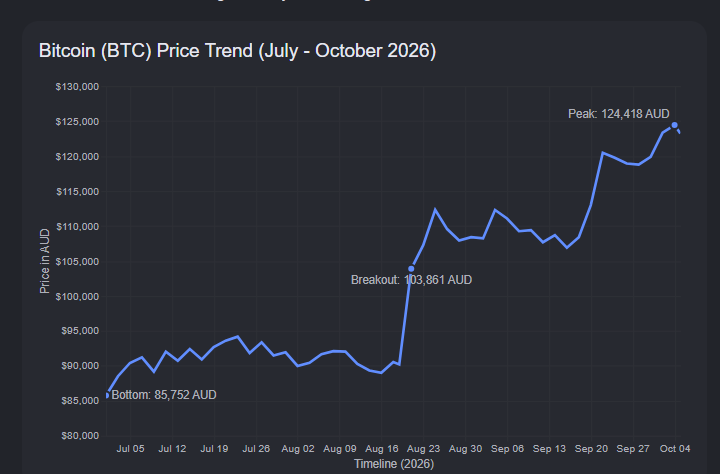
While cryptocurrency has attracted significant capital, most sophisticated investors do not view property and Bitcoin as direct substitutes.
The two assets serve different purposes.
Property can provide rental income, leverage opportunities and tangible ownership. Cryptocurrency offers liquidity, portability and potentially higher growth, albeit with significantly greater volatility.
Most professional investors increasingly view both assets through the lens of diversification rather than competition. In other words, the discussion is shifting away from “property versus cryptocurrency” and towards how each fits within an overall portfolio strategy.
What Mortgage Brokers Should Be Watching
For mortgage brokers, these developments offer important insights.
Increasingly, younger clients arrive with investment portfolios that include cryptocurrency holdings. Some borrowers have accumulated substantial wealth through digital assets and may be seeking to convert those gains into property purchases.
Understanding how lenders assess cryptocurrency-derived wealth is becoming increasingly relevant. Equally important is recognising the risks associated with volatile assets when evaluating a client’s overall financial position.
The broader lesson is that investor behaviour is evolving. Mortgage brokers who understand both traditional and emerging asset classes will be better positioned to engage with the next generation of borrowers.
What Happens Next?
The outlook for both property and cryptocurrency remains highly debated.
Property continues to benefit from powerful tailwinds, including population growth, housing shortages, infrastructure investment and land scarcity. These factors support the long-term case for residential real estate.
Cryptocurrency, meanwhile, could benefit from further institutional adoption, increased regulatory clarity, ongoing ETF inflows and continuing innovation within digital asset markets.
However, neither asset class is immune to risk. Economic slowdowns, regulatory intervention, credit tightening, interest rate volatility and changing investor sentiment could affect both markets.
The Bottom Line
The real story is not that cryptocurrencies are replacing property. Rather, it is that the investment landscape is becoming more diverse.
For generations, property sat almost unchallenged at the centre of Australian wealth creation. Today, investors have access to a broader range of opportunities, and many are choosing to combine traditional assets with digital alternatives.
The smartest investors may not be asking whether property or cryptocurrency is the better investment. Instead, they are asking how each asset class can contribute to a diversified strategy designed to achieve long-term financial goals.
Key Takeaways
- Bitcoin’s rise has been driven largely by growing institutional adoption and expanding mainstream acceptance.
- Higher interest rates have created affordability and borrowing challenges for residential property markets.
- Liquidity and low entry barriers make cryptocurrency attractive to younger investors.
- Property and cryptocurrency serve different investment purposes and are not necessarily direct competitors.
- Mortgage brokers should understand how digital assets are influencing borrower wealth and investment decisions.