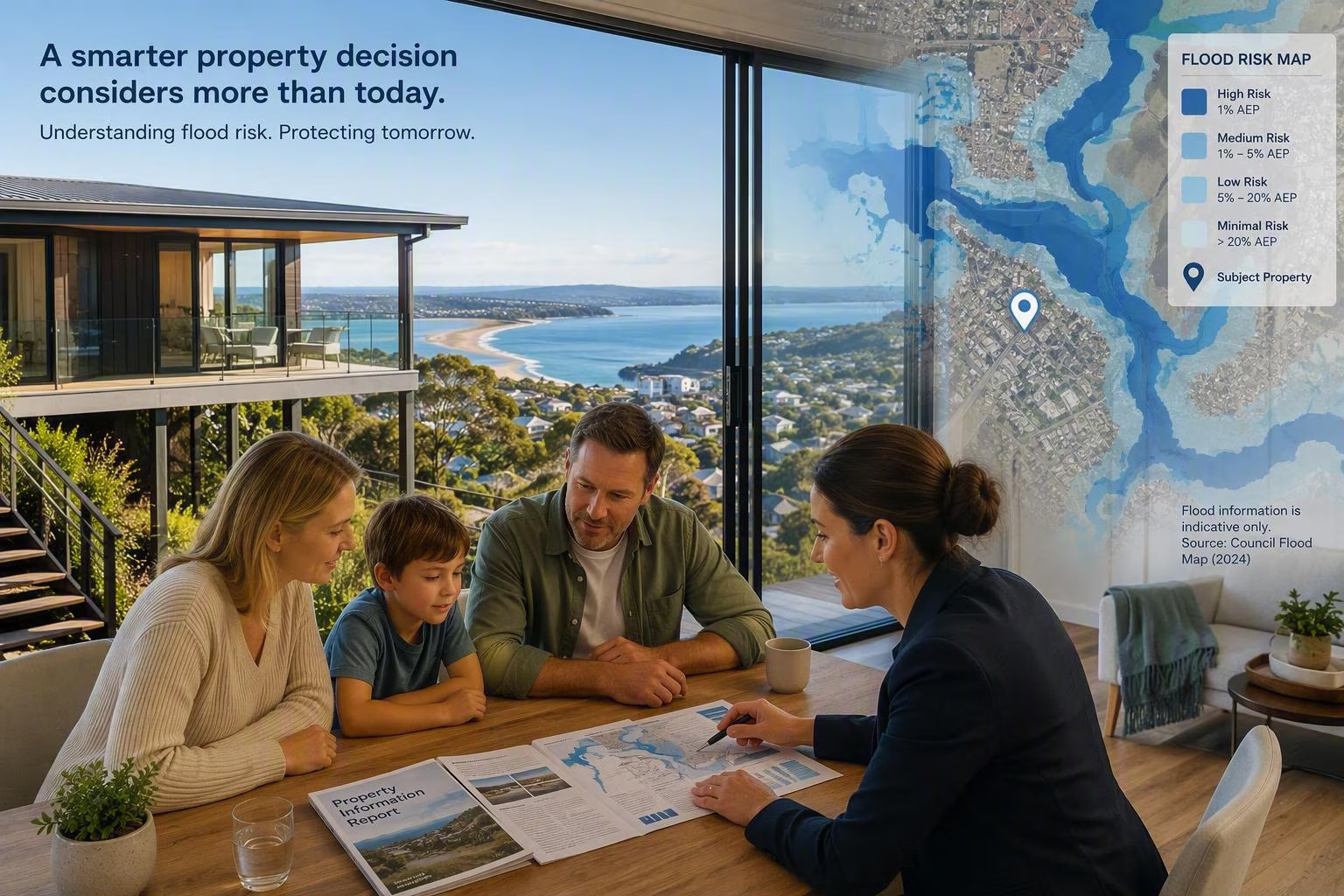
As Australia experiences more frequent and severe climate events, environmental risk has shifted from an abstract concern to a defining factor in property value. Floods, bushfires, rising sea levels and extreme heat are influencing everything from property prices to insurance premiums and lending conditions. For brokers, buyers, and lenders, understanding climate risk isn’t just important — it’s essential for financial decision-making.
Why Climate Risk Matters for Property Value
Climate change is no longer theoretical; it’s reshaping the housing market in real time. According to the National Climate Risk Assessment (NCRA), climate change could strip up to $571 billion from the Australian property market by 2030, with losses growing to $770 billion by 2100 if worst-case scenarios eventuate . Properties in high-risk flood and coastal zones are already experiencing both a devaluation and a rise in ongoing costs, particularly insurance.
For example:
- Flood risk has already wiped $42 billion from property values, with Queensland and New South Wales the hardest hit.
- Insurance premiums in high-risk zones have risen as much as 120% since 2020, making ownership significantly more expensive.
These pressures affect buyer demand, affordability, and even long-term resale potential.

How Insurers Are Responding
Insurance pricing is one of the clearest indicators of climate risk in property. Northern Australia has seen an exodus of insurers from flood-prone regions, leaving some households uninsurable and, consequently, ineligible for home loans. Today:
- Average annual claims from extreme weather are around $4.5 billion, three times higher than three decades ago.
- In some regions, premiums top $5,000–$7,000 per year, dampening demand for homes in those areas3.
Where insurance is unavailable or unaffordable, property ownership becomes financially unsustainable, creating systemic risk in mortgage portfolios.
How Lenders Factor in Climate Risk
Lenders are taking note. APRA’s 2025 Climate Vulnerability Assessment mandated banks to stress test mortgage exposures under various climate scenarios. While there’s no blanket ban on high-risk postcodes yet, climate exposure now influences:
- Property valuations, which affect borrowing capacity.
- Loan-to-value ratios, especially for high-risk zones.
- Approval conditions, where lenders require proof of insurance, which may be costly or unavailable3.
As lending criteria tighten, liquidity and long-term pricing in high-risk regions could erode further.
What Buyers and Investors Are Doing
Buyer sentiment is shifting. After major flood events in Queensland and northern NSW, and devastating bushfires in Victoria, climate considerations have moved up the checklist. Today’s informed buyers:
- Request flood maps and council overlays before making offers.
- Assess insurance estimates early in the process.
- Prefer properties on elevated land, with better drainage or fire-resistant features.
Conversely, exposed properties may still sell — but at a discount and often with longer days on market.
The Role of Brokers in a Climate-Conscious Market
Mortgage brokers have a new advisory role. Beyond structuring finance, brokers must educate clients on:
- Climate risk mapping tools like the PropTrack-Climate Council Value Report.
- Insurance availability checks during pre-approval stages.
- Understanding that short-term bargains in high-risk zones could carry long-term value erosion risks.
With regulators, insurers and buyers aligning around risk-aware decisions, brokers who integrate climate intelligence into property planning will deliver real value.

The Bottom Line
Climate risk is no longer a hidden detail — it’s a financial metric shaping Australia’s property market. For buyers, it could mean steering clear of risk-prone homes. For lenders, it’s about safeguarding asset quality. For brokers, guiding clients through this evolving landscape isn’t a value-add — it’s a necessity.
Climate Risk and Property Values – How Insurers, Lenders and Buyers Assess Environmental Exposure Q&A
1. What is climate risk in property?
Answer:
Climate risk refers to the potential financial and physical impacts of climate-related events—such as floods, bushfires, storms, and sea level rise—on properties. These risks can reduce property values, increase insurance costs, and even affect home loan approvals.
2. How does climate risk affect property values in Australia?
Answer:
Properties in areas prone to flooding, bushfires, or coastal erosion are experiencing price pressure. Research shows flood risk alone has cut $42 billion from property values nationwide, meaning homes in high-risk zones may underperform compared to safer suburbs1.
3. Why are insurers increasing premiums for some areas?
Answer:
Insurers price risk based on the likelihood of claims. With extreme weather events tripling in cost over the last 30 years, insurers are raising premiums in high-risk regions or even withdrawing cover entirely. Without affordable insurance, some homes have become uninsurable.
4. Can climate risk affect my home loan approval?
Answer:
Yes. Lenders require proof of insurance before settlement. If a property can’t be insured or has very high premiums, your loan application may be delayed or declined. Some banks are also starting to factor climate exposure into property valuations and loan conditions2.
5. What areas in Australia are most at risk from climate-related property devaluation?
Answer:
Coastal suburbs, flood-prone river catchments, and bushfire-affected zones are key hotspots. Regions like Northern Rivers (NSW), Hawkesbury-Nepean (NSW), parts of Queensland, and low-lying coastal strips are among the highest-risk areas.
6. How can buyers check a property’s environmental exposure?
Answer:
Buyers should:
- Review council flood maps and bushfire overlays
- Check the property’s elevation and planning restrictions
- Request insurance quotes before purchase
- Use tools like the PropTrack-Climate Council Property Value Report or state hazard mapping portals.
7. What role does insurance play in property affordability?
Answer:
Insurance costs are a hidden driver of affordability. In flood-prone areas, premiums can reach $5,000–$7,000 per year, significantly increasing ownership costs and reducing buyer demand, which can lead to slower price growth.
8. Are lenders refusing loans for climate-risk properties?
Answer:
Not outright—but the trend is heading that way. APRA now requires banks to stress-test mortgage portfolios against climate scenarios. This has led to tighter lending criteria and valuation scrutiny for homes in high-risk zones.
9. How does climate risk impact property investors?
Answer:
Investors face lower yields from higher insurance costs, longer selling times, and potential value declines in exposed areas. Conversely, low-risk suburbs are beginning to attract a “climate premium,” meaning they outperform similar high-risk locations.
10. What can brokers do to help clients?
Answer:
Mortgage brokers can add value by guiding buyers through climate risk checks, advising on insurance affordability early, and identifying lenders with policies suited for properties in moderate-risk zones. This proactive approach helps clients make informed, resilient purchasing decisions.